Best Men’s Leather Boots: Choose by Fit, Use and Construction
A research-based guide to choosing leather boots for everyday wear, rough ground and long days on your feet, with fit checks and official model examples.
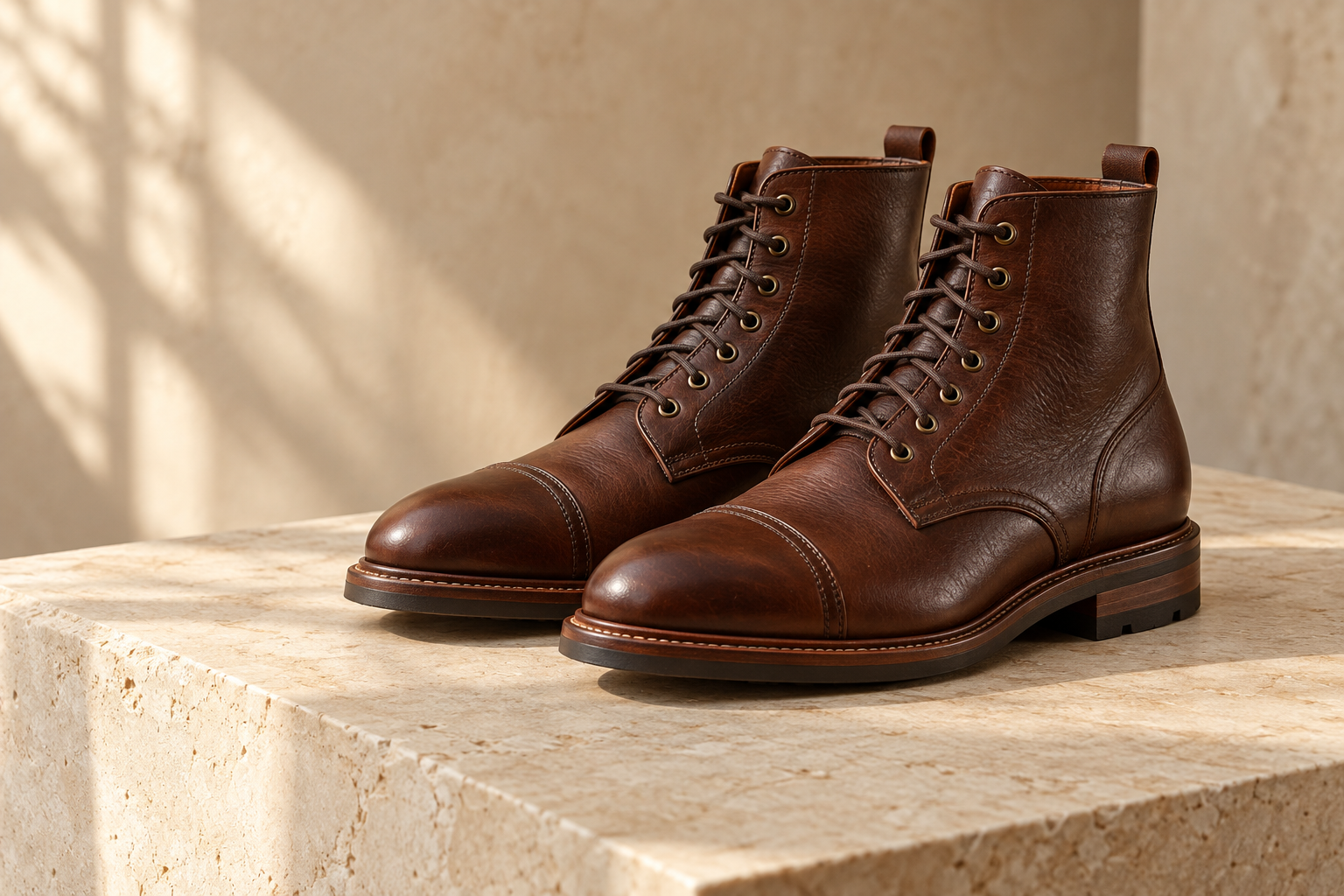
There is no single best boot for every man
“Best men’s leather boots” is a useful place to start, but the right pair depends on where you will wear it. A city boot, a trekking boot and a certified work boot solve different problems. This research-based guide compares the questions to ask before buying; it is not a hands-on test or a universal ranking.
Start with four things: the shape of your foot, the surfaces you walk on, the weather you face and how you expect to maintain or repair the pair. A vintage-inspired style is a design reference; it does not mean a boot is vintage or pre-owned.
1. Match the boot to its main use
For commuting and everyday city wear, look for a shape that works with your usual trousers, a sole suited to pavements and a fastening system that lets you adjust the fit. A leather service boot can be versatile, but a traditional design may feel heavy or stiff compared with a lighter casual shoe.
For walks on uneven or wet ground, compare hiking-specific features such as the sole, lining, support and the maker’s stated use. A heritage boot can look rugged without being designed for sustained hikes or wet trails. For workplace hazards, check the required protective certification and the exact model specification; appearance alone does not establish protection.
Think about a normal week rather than an imagined adventure. If most of your steps are on pavements, a heavy boot with an aggressive tread may be more boot than you need. If you regularly walk muddy paths, a smooth city sole may be the wrong compromise. One pair can cover several settings, but it will always make some trade-offs.
2. Get the fit right before thinking about break-in
Try boots with the socks you plan to wear. Check that your toes can move without hitting the front, the forefoot is not pinched, and the heel stays reasonably secure when you walk. Lacing can adjust the hold over the instep, but it cannot make an unsuitable last fit every foot.
Do not buy a painful size on the assumption that leather will stretch enough. Some uppers soften and ease with wear, but the amount depends on the leather, lining, construction and where pressure occurs. Use the maker’s sizing advice, compare foot measurements with its chart and check the return conditions before wearing the boots outside.
3. Choose the sole for the surfaces you use
A flatter wedge sole and a lugged outsole have different profiles and are intended for different conditions. Consider the ground, rain, indoor use and how much grip or underfoot structure you need; the name of a sole alone does not tell you how it will feel on your route. If possible, compare the outsole pattern and compound in person.
The Classic Moc 875 is one example of a moc-toe boot with Red Wing’s Traction Tred wedge outsole. Its shape and sole create a different look and use profile from the Iron Ranger’s mini-lug sole. Check the maker’s current product and care information, and remember that grip varies with surface and conditions.
A military-style outsole is still only one design choice, not evidence that a boot is suitable for every outdoor activity. Look at the tread depth and spacing, the maker’s intended use and the boot’s upper and lining. For long walks on rough trails, compare hiking models designed for that purpose rather than assuming a fashion or heritage boot will perform the same job.
4. Treat construction as a repair question
A Goodyear welt is a construction detail, not a promise that every boot can be repaired indefinitely. Ask whether the maker or a local cobbler offers resoling for the specific model, what the repair costs and how the boot is built beyond the visible welt. The maker’s repair service, parts availability and your location all affect whether repair is practical.
Check the upper, lining, eyelets, stitching and sole as a whole. A long product description or “heritage” label does not replace clear information about materials, care and repair options.
5. Know the boot style you are comparing
A service boot usually has a lace-up ankle-height upper and a practical, relatively simple shape. A moc-toe boot has a stitched apron around the toe and often a more casual look. A chukka is usually lower and less structured; a Chelsea boot trades laces for elastic side panels. These names describe broad design families, not guaranteed levels of comfort, formality or weather protection.
For a smart-casual wardrobe, a plain-toe or cap-toe boot in a restrained colour may be easier to combine with different trousers than a heavily detailed or contrast-soled design. A moc-toe or lug-soled boot can make a stronger casual statement. Consider the clothes you already wear, the trouser opening and whether the boot will be used indoors as well as outside.
6. Separate vintage style from genuine vintage boots
Searches for “vintage boots for men” can mean two different things: new boots with a heritage-inspired design, or genuinely old, pre-owned footwear. A new boot described as vintage-inspired is not an antique and does not have a wear history. The distinction matters because the buying checks are different.
For a new heritage-style boot, verify the leather description, finish, construction, sizing information, repair options and return policy. For a pre-owned pair, ask for clear photographs of the soles, heels, welt, lining and high-stress creases. Check for uneven wear, cracked or over-dry leather, replaced soles, loose stitching and odour or moisture damage. Old age by itself is not proof of quality, and a famous model name cannot show the condition of an individual pair.
7. Read leather and weather claims carefully
Full-grain, suede, nubuck and waxed leather describe different surfaces or finishes; none alone tells you how a finished boot will perform in rain. Check whether the boot is lined, whether seams or construction details affect water entry, what the maker says about wet conditions and which care products it recommends. Do not assume that “leather”, “heritage” or “rugged” means waterproof.
For frequent rain, compare a dedicated waterproof membrane boot with an unlined or leather-lined heritage boot, and consider the compromise: a membrane changes breathability and care, while a traditional leather boot may need more drying time and careful maintenance. Follow the maker’s guidance for your exact leather; a treatment that suits smooth leather may alter the colour or surface of suede.
8. Buying leather boots online: reduce the guesswork
Read the maker’s size chart and measure both feet in the socks you plan to wear. Compare length and width, not just your trainer size: brands use different lasts and sizing systems. If the chart explains how to measure, follow that method. A retailer’s advice for one model may not transfer to every boot in its range.
Before ordering, check the delivery region, duties, return window, whether returns are free, and whether trying the boots indoors preserves eligibility. Look for photographs from several angles and clear information about upper, lining, sole and construction. If you need orthotics or have a specific fit concern, ask the maker before buying rather than expecting a break-in period to solve it.
9. Think about maintenance and total cost
The purchase price is only one part of the decision. Check whether the maker sells replacement laces or insoles, publishes care instructions and offers repairs or resoling for that model. A stitched construction may be repairable, but the condition of the upper, midsole and welt determines whether a repair is worthwhile; construction labels do not guarantee unlimited resoles.
Keep the routine simple: brush off dry dirt, let wet boots dry at room temperature away from direct heat, and condition only when the leather and maker’s instructions call for it. If repairability matters, ask a local cobbler what they can work on and compare likely repair costs with replacement cost before deciding.
Model examples: compare the brief, not the marketing
These are examples of different design briefs, not winners from a wear test. The product details below come from each maker’s own page and stock, prices and shipping can change. Old Mulla is included as the Portuguese example; its listed product details should be weighed by the same criteria as the other models.
- Old Mulla — Tejo Black Boots Military SoleThe maker lists natural leather, a leather lining, a military-style sole, resoling and manufacture in Portugal. Its current product page showed the model as sold out when checked, so verify availability and the exact specification before ordering.
- Red Wing Heritage — Iron Ranger 8111A cap-toe service-boot example with Amber Harness leather, Vibram 430 Mini-Lug outsole and Goodyear leather welt. The EU shop currently limits shipping to EU destinations.
- Red Wing Heritage — Classic Moc 875 in Oro LegacyA moc-toe silhouette with Traction Tred wedge outsole and Oro Legacy leather. Compare its last and fit guidance with your foot shape; the EU shop currently limits shipping to EU destinations.
- Hanwag — Tatra IIA trekking-specific boot described by the maker for day hikes and hut-to-hut treks, with a Vibram sole, leather lining and resoleable construction. It is a specialised option for regular walking rather than a general city boot.
A quick buying checklist
Choose the boot that fits your foot and routine, then check the details you can verify: intended use, fit guidance, upper and lining, sole, repair route and return terms. A vintage look can be part of the appeal, but the best men’s leather boots for you are the pair that suits your real week and the ground underfoot.
- What will I use these boots for most: commuting, casual wear, hiking or a specified work hazard?
- Does the maker offer a last or width that suits my foot, and can I return the pair after an indoor fit check?
- Is the sole appropriate for my usual surfaces and weather?
- Can I get clear care advice and, if it matters to me, a realistic repair or resole service?
- Have I checked delivery, duties, returns and current product details for my country?