How to Stretch Leather Shoes Safely (and When to Stop)
A careful approach to a tight pair: distinguish normal break-in from a poor fit, make only small adjustments and know when a cobbler should take over.
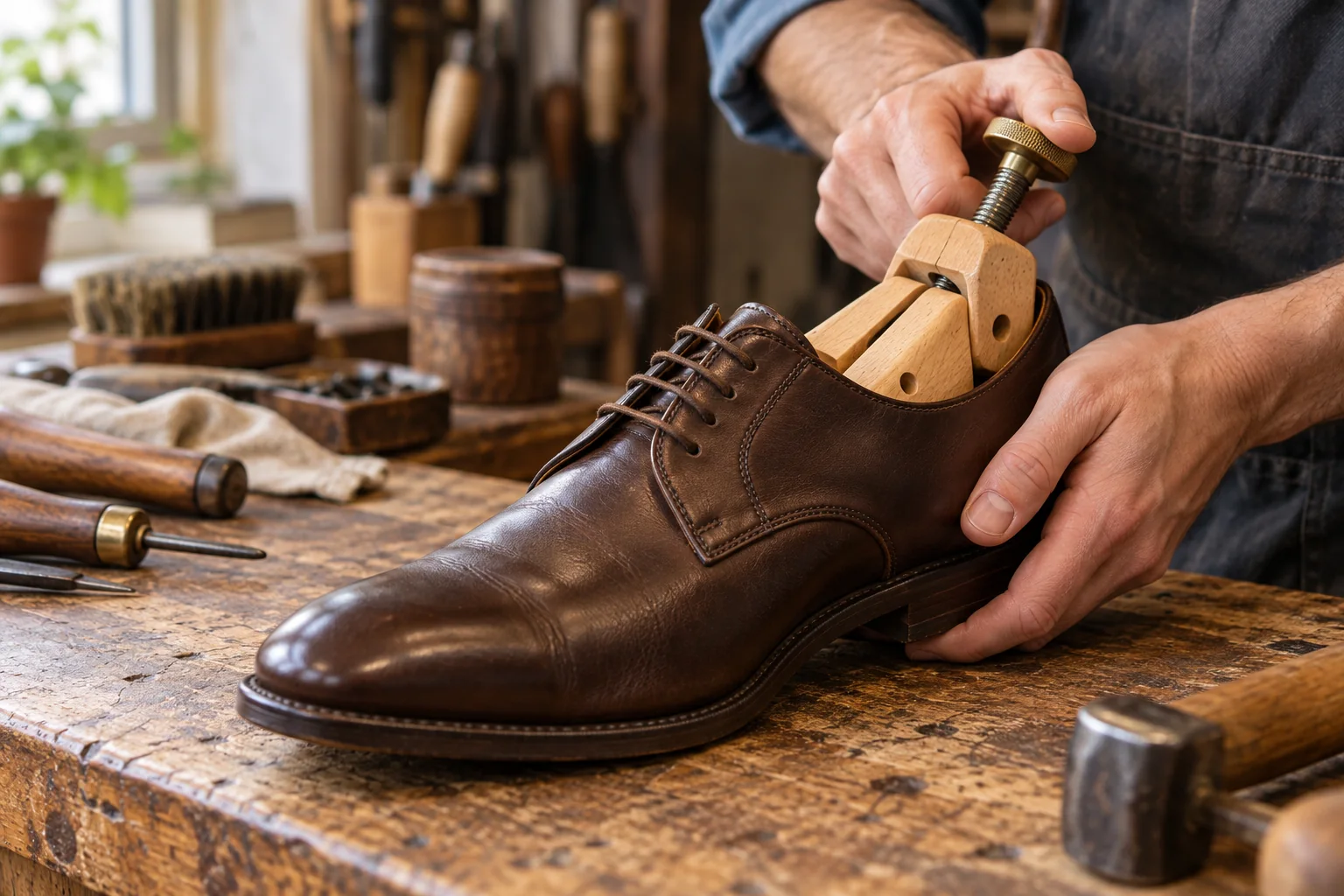
First decide whether stretching is the answer
A new leather shoe can feel firm as its upper begins to flex, but it should not cause sharp pain, numbness, pressure on a toe joint or pinching that makes you change how you walk. Leather may give a little in some directions; it cannot reliably make a shoe longer or transform a fundamentally wrong shape. If your toes hit the front, your heel is unstable, or the shoe is far too narrow, exchange or return it while the seller’s policy allows.
Check fit near the end of the day, when feet may be slightly larger. Wear the socks you expect to use, fasten the shoes as intended and stand up. Your toes need room to spread and move. Compare both feet: one is often larger. A fitter or experienced cobbler can help distinguish a tight vamp or forefoot from a mismatch in length, width or last shape.
Use gradual, local pressure
For mild tightness across the forefoot, wear the shoes at home for short periods on a clean surface, then reassess. Stop if discomfort increases or leaves a lasting mark. A purpose-made shoe stretcher can apply more controlled pressure, especially when paired with the correct spot-stretching attachment. Follow its instructions and adjust in small increments over time; forcing the device can distort seams, lining or the shape of the shoe.
The leather type matters. Smooth leather may respond differently from patent leather, laminated finishes, suede, nubuck or shoes with delicate linings and structural reinforcements. The outside leather may not be the only layer: adhesives and internal stiffeners can also be affected. If you are uncertain, ask the maker or a cobbler before treating the shoe. A professional can apply local stretch more precisely than a broad, forceful method at home.
Be cautious with sprays, water and heat
Stretch sprays are not universal solutions. Some are intended for particular leathers and are applied with a stretcher; read the label and test a discreet area because colour or finish may change. Do not assume that wetting leather will make it safely stretch. Water can leave marks, and soaking a finished shoe may affect shape, lining, adhesive or sole attachment.
Avoid the freezer-bag trick, boiling water, a hairdryer and improvised clamping. These methods make expansion hard to control and can damage the shoe or create a bigger problem than the original tightness. Heat can dry or distort leather; freezing a water-filled bag can exert pressure in the wrong place. If the shoe is valuable or made from a delicate finish, keep experimentation off the table.
Examples of shoe stretchers
A stretcher may ease a small, local pressure point; it cannot reliably add length or correct a last that is fundamentally wrong. Be especially cautious with vintage footwear, whose age, previous repairs and leather condition may be uncertain. If a pair is valuable or brittle, ask a cobbler before applying pressure.
- Volant James — Wood Shoe StretcherThe maker describes a width-only stretcher with adjustable spot plugs; confirm sizing and instructions for your shoe.
- Sof Sole — Shoe StretcherA wooden stretcher marketed to help adjust shoe fit. Use gradual pressure and stop if seams, finish or leather show strain.
What a cobbler can do
A cobbler can often focus pressure at a bunion, a toe joint or another specific area, and can advise whether the construction will tolerate it. They may also identify a separate problem, such as a seam allowance, stiff lining or shape that simply does not suit your foot. Ask what area can be altered, how much movement is realistic and whether the process might affect the finish. There is no guaranteed amount of stretch.
Think of stretching as a small fit adjustment rather than a rescue plan. Measure and try shoes carefully, use the size chart as a starting point, and contact the seller for fit advice when possible. If a shoe needs extensive expansion to feel wearable, the better choice is usually a different size, width or last. Comfort that is right from the start is safer than trying to force a mismatch into submission.