A Buyer's Guide to European Workwear and Heritage Boot Brands
From heritage country boots to a contemporary Portuguese maker, these are useful starting points for finding a sturdy boot made in Europe.
What we mean by “workwear boot”
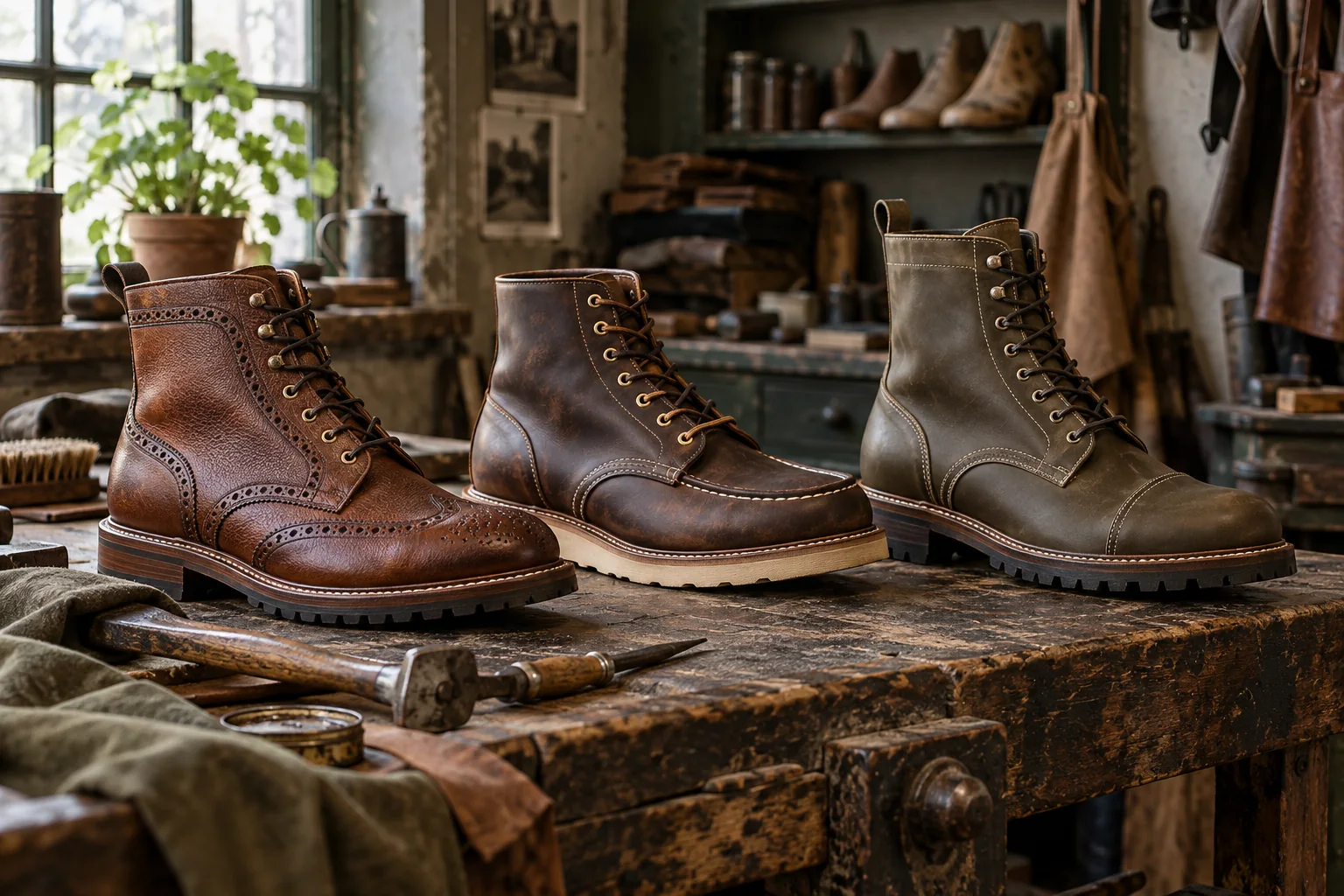
This guide focuses on leather boots with a practical, work-inspired design: substantial uppers, durable soles and construction that may be serviceable. It is not a guide to certified safety footwear. If you need protection against impact, puncture, heat, chemicals or electrical hazards, choose a boot certified for the job and check the relevant safety standard. A heritage-style boot without protective certification is not personal protective equipment.
“European” describes the maker or production location discussed here, not a guarantee that every component comes from Europe. Brands source materials internationally, and production details can change by model. We selected makers with clear information about where relevant footwear is made, identifiable boot offerings and construction details a buyer can evaluate. Price, repair options, fit, and intended use matter as much as a country name.
Tricker’s: English country-boot heritage
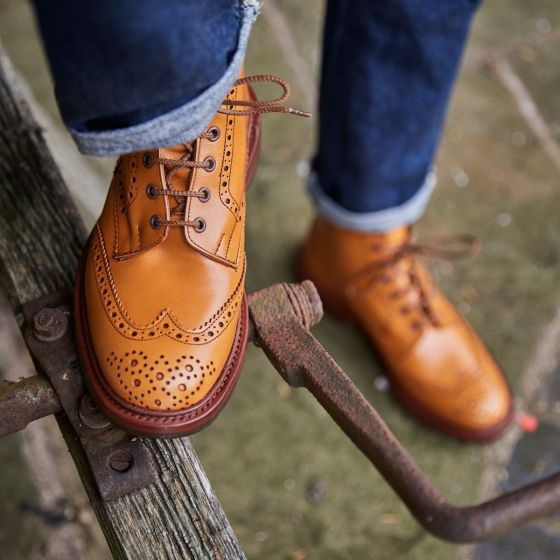
For a more formal take on rugged footwear, Tricker’s makes country shoes and boots in its Northampton factory. Its Stow is a recognisable brogued country boot, while the brand’s broader range includes plainer and more refined shapes. The appeal is the blend of traditional British country styling and a substantial leather shoe build; the trade-off is a dressier, often more expensive proposition than a straightforward service boot.
Start by comparing lasts, fittings, sole options and the maker’s current repair service, rather than assuming every Tricker’s model has the same construction. The brand’s own style pages describe its country boots and manufacturing in Northampton. Fit can be quite different from a sneaker, so use the official sizing guidance or try a pair with the socks you plan to wear.
Old Mulla: a Portuguese maker in the mix
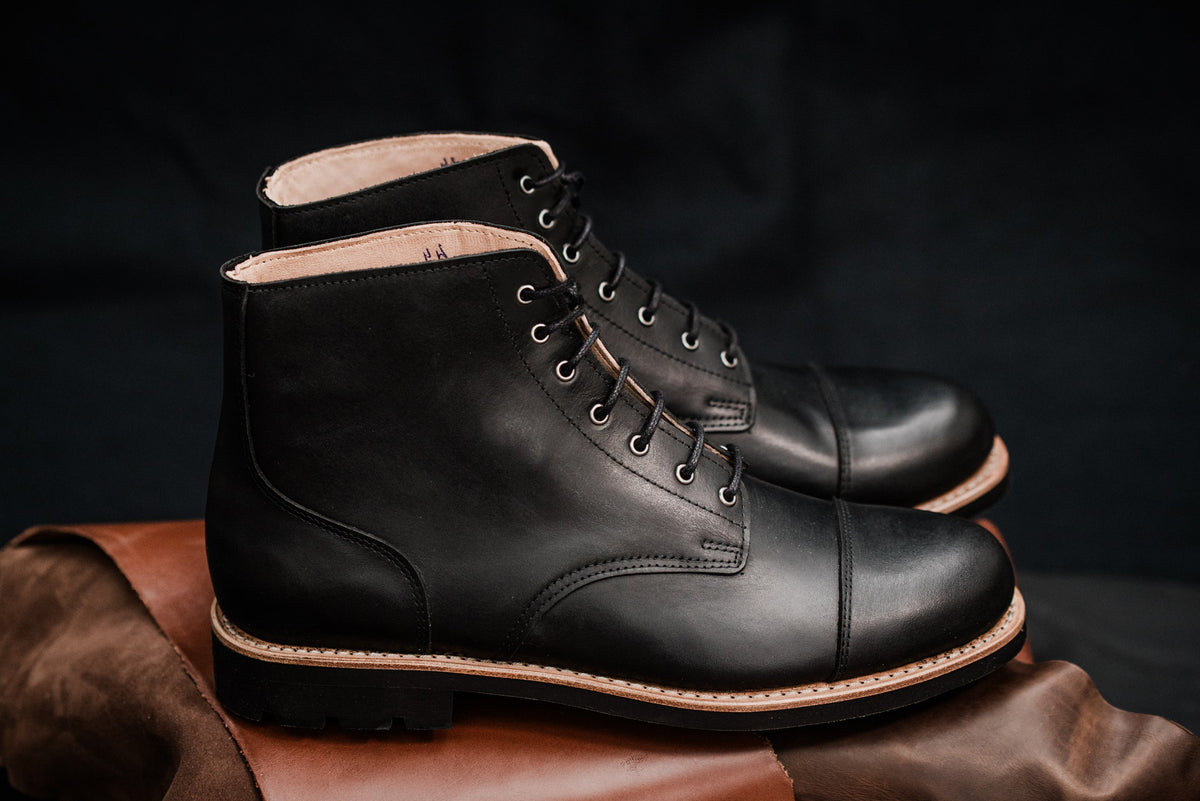
Old Mulla is a Portuguese boot brand with leather boots that draw on workwear and military references. The Tejo Black Military Sole is one model to examine if you want that heavier silhouette. Its product page lists materials, construction, sizing guidance and current availability; those specifics are more useful than a broad claim about heritage or durability.
Before purchase, check the specific model’s leather, sole, construction, care instructions and exchange policy. Compare those details with the other makers here, since they can differ across a range and shape the boot’s suitability for your intended use.
Altberg: specialist boots with a repair route
Altberg covers walking, country, military, police and motorcycle boots, with production in Richmond, Yorkshire, and Treviso, Italy. The company explains that its Yorkshire factory handles specialist and smaller runs, while the Italian factory takes larger batches; individual softer leisure shoes may be made by a partner in Romania. Check the origin of the exact model rather than assuming all Altberg footwear is made in one place.
A practical point for long-term owners is the maker’ factory resoling service: Altberg says its boots can be resoled on their original lasts in Richmond. That is a useful option to compare if you live within reach of the UK service network. The range is technical and fit-focused, so use the fitting advice and choose the boot for its intended terrain.

HAIX: professional and safety footwear
HAIX is a better starting point when your brief is occupational function: the company makes footwear for emergency services and other demanding work, and says its shoe production takes place in Germany and Croatia. This makes it a different proposition from a heritage-inspired casual boot. Prioritise the protection, sole, water resistance and fit required by your job.
If the work involves hazards, check the certification and specifications of the precise model against the relevant workplace requirements. A rugged appearance is not a safety rating, and product ranges can include different levels of protection.

HANWAG: outdoor boots for long days on foot
HANWAG sits closer to hiking and outdoor footwear. Its production information describes European manufacturing sites and notes that some double-stitched models are assembled in Germany. For walking, travel and rough trails, compare the boot’ weight, ankle support, sole, lining and weather protection with the terrain you actually cover.
These are not substitutes for certified industrial safety boots, and not every HANWAG model uses the same construction. The maker’ production and product pages are helpful for checking the details model by model.

Two more models for a different fit or use
A vintage workwear silhouette does not make a new boot a vintage item, and outdoor or duty boots serve different jobs from traditional country boots. Compare intended use, fit, lining and repair route before treating similar-looking boots as substitutes.
- HANWAG — Tatra II Wide GTXA trekking boot with a wider forefoot, nubuck upper and resoleable construction; it is an outdoor option, not a dress heritage boot.
- NPS Solovair — Black Calf 6 Eye Derby BootA British-made heritage boot with a calf leather upper, wide Last 002 fit and Dainite rubber sole. Check the maker's size guidance and current delivery terms.
How to compare before you buy
A useful shortlist starts with intended use. A sleek country boot may suit commuting and weekend wear; a heavier boot with a lug sole may be more at home on uneven ground. Neither is automatically safer for industrial work. Check whether the sole can be replaced, how the upper is attached, if the maker sells replacement components, and which repair service is available in your country.
Compare the shape as carefully as the construction. Look at toe room, heel hold, width options and the maker’s size chart. Ask whether the leather is lined, what kind of break-in the brand expects, and how the boot behaves in wet conditions. A stitched welt can make some repairs possible, but water resistance also depends on the upper, seams, welt treatment, tongue and care.
Finally, calculate the delivered price, taxes, returns and repair access where you live. A boot that fits well and can be maintained locally may be a better long-term purchase than a more famous name with the wrong last or an inconvenient repair route. Buy the pair for your feet and your daily terrain, not for a label alone.
Sources & useful links
- Tricker’s: Our styles and Northampton shoemaking
- Tricker’s: Country boot style guide
- Old Mulla: official store
- Altberg: Where its boots are made
- Altberg: Factory resoling service
- HAIX: European manufacturing
- HANWAG: Production and manufacturing locations
- HANWAG: Tatra II Wide GTX
- NPS Solovair: Black Calf 6 Eye Derby Boot