Can Leather Boots Be Stretched? A Safe Guide to Fit, Width and Shaft Adjustments
A practical, research-based guide to tight leather boots: find the pressure point, understand what can change, and know when a different size or a cobbler is the safer answer.
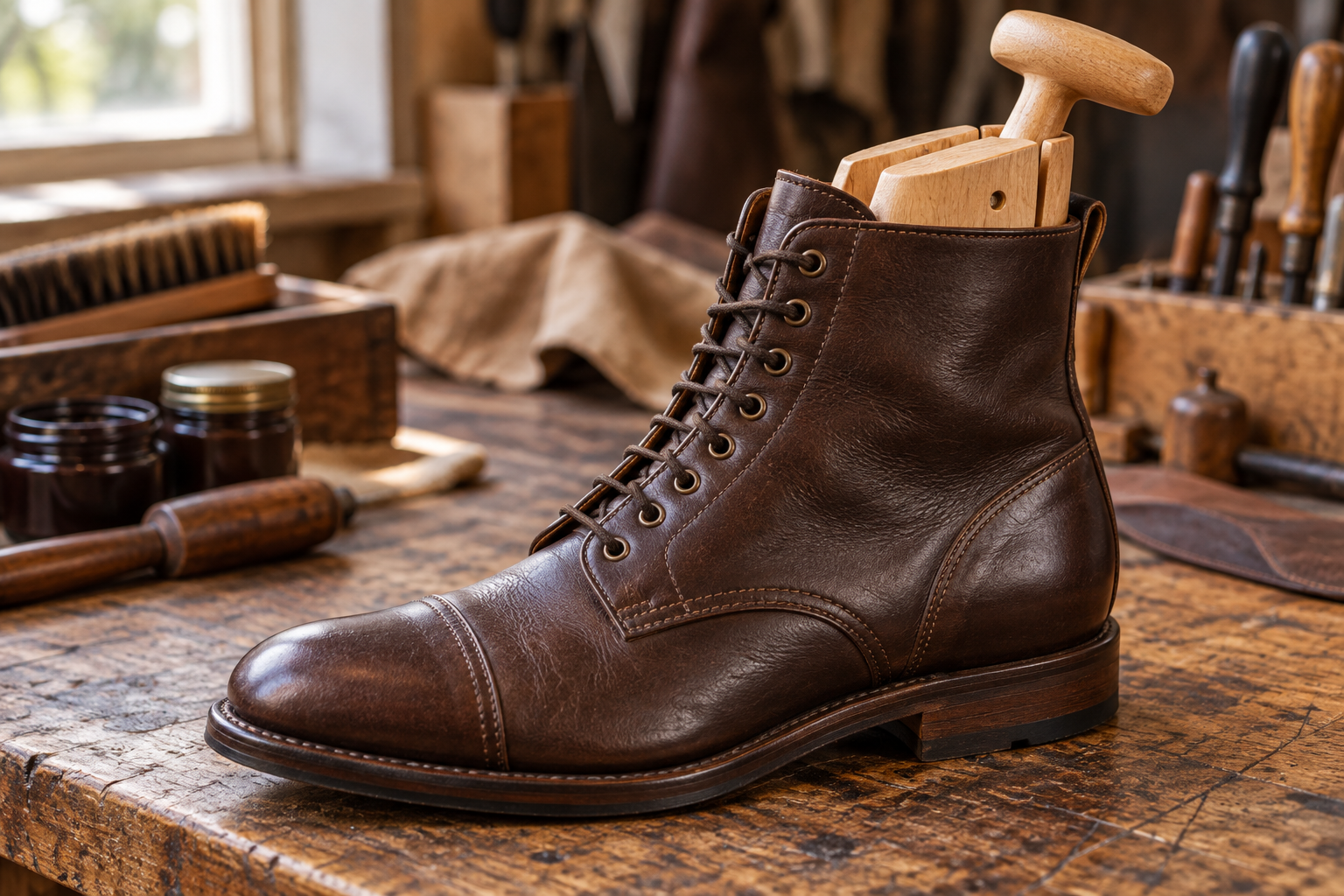
The short answer: a little width may change; length will not
Leather boots can sometimes be eased slightly at a local pressure point, usually across the forefoot or instep. The amount depends on the leather, lining, seams and reinforcement inside the boot. Stretching is not a dependable way to make a boot longer, change its basic shape or turn a poor fit into a good one.
If your toes touch the front, your heel will not stay in place, or the boot is clearly too narrow, ask about another size, width or last while the return window is open. This guide is based on product instructions and footwear-fit guidance; it is not a hands-on test or medical advice.
Find where the boot is tight
Before trying anything, wear both boots with the socks you expect to use and fasten them normally. Note exactly where pressure occurs. A boot may feel snug across the ball of the foot, press over the instep, rub at the ankle, or feel tight around the calf or shaft opening. Those are different problems and may need different solutions.
A small pressure point at the side of the forefoot may be a candidate for a local width adjustment. Pressure over the instep may respond to a different lacing pattern or an instep-specific stretcher. If the toes hit the end, the boot is too short or its toe shape does not suit you; a stretcher cannot create useful extra length. If the problem is at the calf, a standard shoe stretcher will not reach the area.
Check that the heel is held securely without painful rubbing, the toe box has enough depth and width, and your toes can move. Footwear guidance from Guy's and St Thomas' NHS Foundation Trust advises against relying on "breaking in" when a shoe does not feel right during fitting. The same caution is useful when judging a new pair of boots.
Break-in is not a cure for a bad fit
Some new leather uppers feel firm at first and may soften as the boot flexes. That is different from expecting pain to disappear. Stop wearing a boot that causes sharp pain, numbness, tingling, blistering or pressure that changes your walking. Do not force your foot into a boot with thick socks to speed up stretching.
If you have diabetes, reduced sensation, circulation problems or a history of foot wounds, pressure marks may be harder to notice and can be more serious. Ask a podiatrist or clinician about footwear that suits your needs instead of attempting an at-home stretch.
What you can try at home for mild pressure
First check the retailer's return conditions. Keep the boots indoors and clean until you are sure the fit is acceptable. Try a short indoor wear, then check your feet and the leather. Stop if redness, soreness or rubbing remains after you take them off.
For a small, specific pressure point, use only a stretcher that is designed for the boot and the adjustment required. Set it with minimal pressure and recheck frequently. Do not wind it as far as it will go or leave a strained boot under pressure for an arbitrary period. Follow the device instructions and the boot maker's care guidance.
A change to lacing can sometimes reduce pressure over the instep without altering the leather. Loosen or skip an eyelet near the pressure point while keeping the heel secure. If that does not help, do not compensate by tightening other parts of the boot until they hurt.
Boot shafts need boot-specific tools
A shoe stretcher is not automatically suitable for a boot. Its shape and length may not fit the boot securely, and it will not adjust the calf or shaft of a tall style. Woodlore, for example, says its shoe stretcher is not recommended for boots, high heels or narrow widths.
Specialist suppliers list separate tools for boot vamps, insteps and calves. A shaft adjustment can affect more than the outer leather: lining, seams, zips, overlays and stiffeners may all limit what is possible. For tall, lined, expensive or vintage boots, ask a cobbler to inspect the pair before applying pressure.
- Woodlore — Shoe StretcherThe maker explicitly says this shoe stretcher is not recommended for boots. Check the current instructions before using any device.
- Frankford Leather Company — Shoe and Boot StretchersThe supplier lists separate boot, boot-vamp and Western-boot stretcher categories. These are examples of different tool types, not a recommendation to stretch every boot.
Avoid water, freezing and direct heat
Do not soak a boot, freeze a water-filled bag inside it, pour boiling water over it, or heat the leather with a hairdryer or radiator. These shortcuts make it difficult to control where and how much the boot changes shape. Water can leave marks, heat can dry or distort the upper, and either may affect lining, adhesives, seams or internal structure.
Stretch sprays also vary. Use one only if its label and the boot maker say it is suitable for that leather and finish. Test a hidden area first because a product may darken or mark the surface. Patent, coated, suede and nubuck finishes can react differently from smooth leather; ask the maker or a cobbler if you are unsure.
When to ask a cobbler
A cobbler can identify whether pressure is limited to one area and choose a tool shaped for the boot. Ask what area can be adjusted, how much movement is realistic, whether the leather or lining could be marked, and whether the work could affect a return or warranty. There is no guaranteed amount of stretch.
A professional opinion is especially useful for calf or shaft tightness, a stiff toe box, a boot with a zip or delicate lining, and a valuable or older pair. If the boot is too short or the last is wrong for your foot, a different pair is usually a better answer than a larger stretch.
Quick answers
The safest approach is to buy the right size and shape first. Treat stretching as a limited adjustment for mild pressure, not a rescue plan for boots that do not fit.
- Can leather boots be stretched in length? Not reliably. If your toes touch the front, try a different size or last.
- Can a boot shaft or calf be stretched? Sometimes a small adjustment is possible with a boot-specific tool, but ask a cobbler to assess the shaft, seams and lining.
- Will every leather stretch? No. The result depends on the leather, finish and construction; some materials or reinforced areas may not tolerate stretching.
- How much should I stretch a boot? There is no universal safe amount. Aim only to ease mild, local pressure and stop if the boot or your foot shows strain.