Vintage Men's Boots: Archival Patterns, Heritage Leathers and Modern Build Quality
How authentic early-to-mid 20th century workwear and military patterns inform modern bench-crafted boots, from unlined quarter panels to historic lasts and repairable sole assemblies.
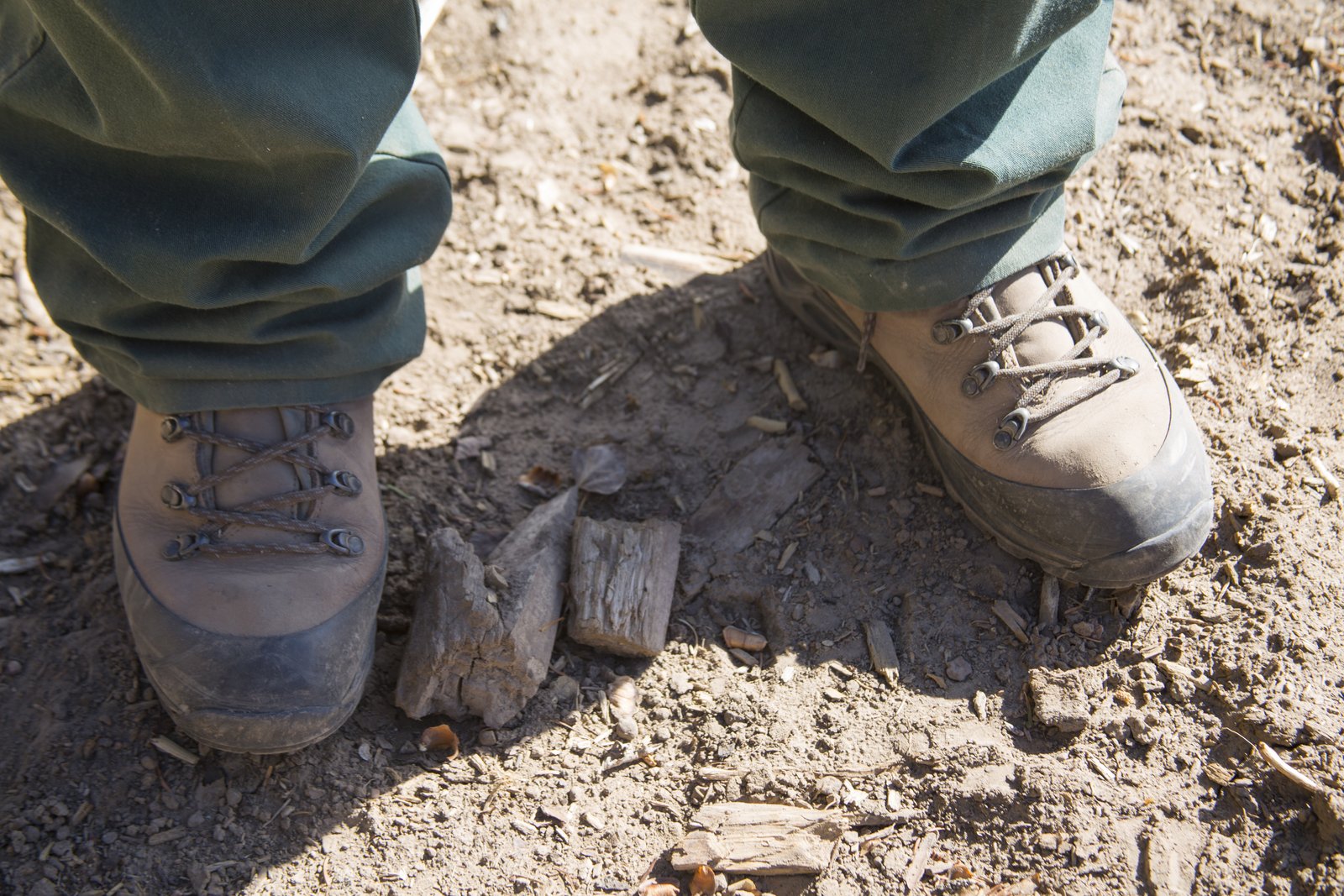
The functional origins of vintage boot silhouettes
True vintage boots were never conceived as stylistic statements. Every stitch, eyelet placement, and sole thickness arose from ruthless occupational necessity. In the early 20th century, timber fellers, foundry workers, farmhands, and infantrymen depended entirely on their footwear for safety and all-day endurance.
Key design hallmarks evolved directly from these functional demands: unlined leather quarters that breathed easily and dried quickly overnight; bellows or half-gusseted tongues that prevented dirt, gravel, and sparks from entering; and unpadded leather collars that wrapped neatly around wool-socked ankles. Today, heritage makers study original archival patterns from the 1910s through the 1980s, recreating the honest silhouettes that fast fashion abandoned.
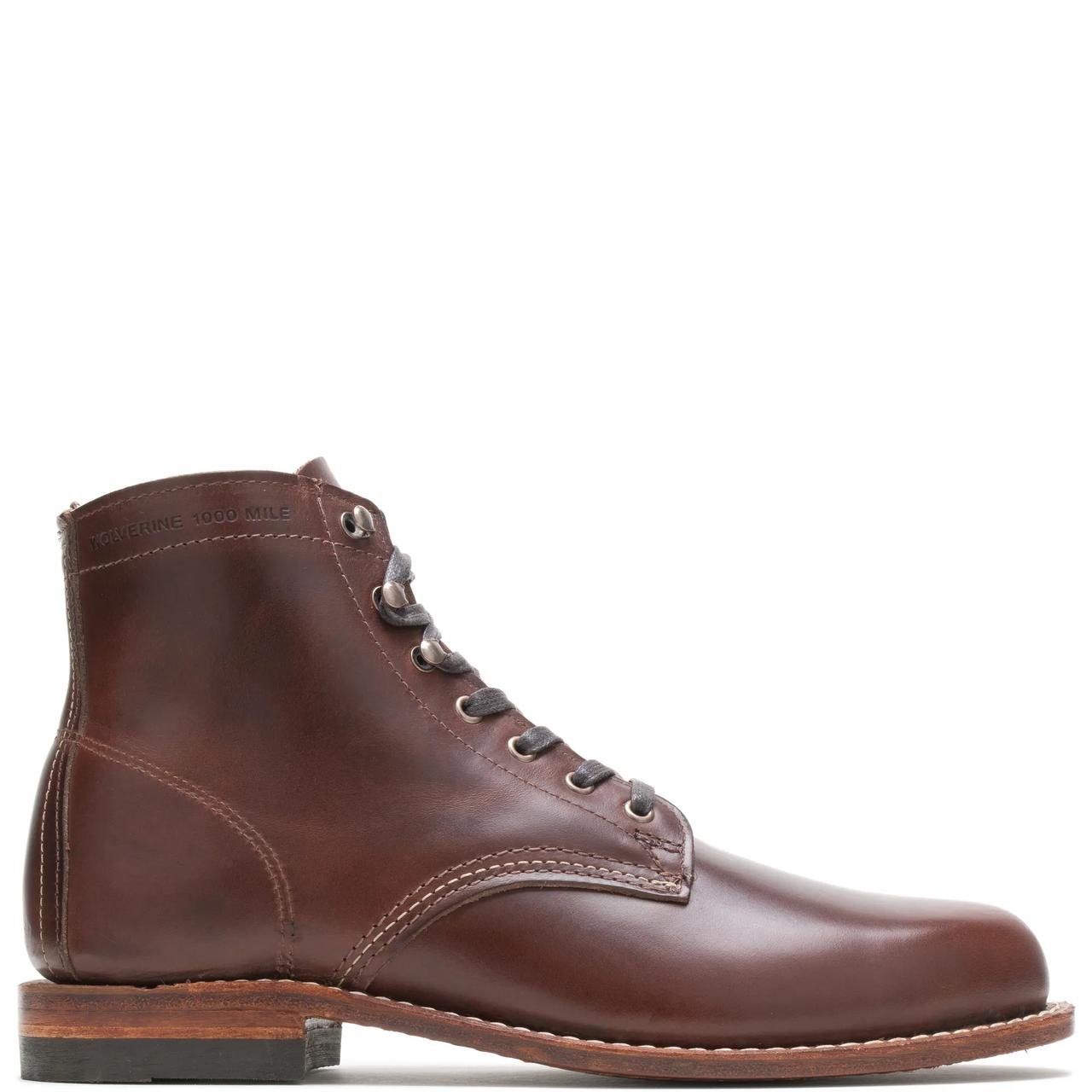
Wolverine 1000 Mile: the 1914 American factory benchmark
First introduced in 1914 in Rockford, Michigan, the Wolverine 1000 Mile was named for its promise of delivering a thousand miles of wear to the working man. It established the archetype of the low-profile American service boot.
Still crafted in Michigan using traditional Goodyear welt construction, the modern 1000 Mile features unlined Horween Chromexcel leather that moulds closely around the ankles. Its flat leather sole, stacked leather heel with a rubber lift, and neat contrast stitching deliver an authentic, understated mid-century look that looks exceptional with cuffs rolled high over selvedge denim.
Oak Street Bootmakers: military trench boot heritage
Chicago's Oak Street Bootmakers draws direct inspiration from the Pershing trench boots issued to American troops during the First World War. Built on their proprietary Elston last, the Trench Boot balances military utility with refined civilian proportions.
Featuring an unlined toe box that collapses gracefully into a vintage 'soft toe' profile over months of wear, the boot is constructed with 360-degree Goodyear welting and Dainite studded rubber outsoles. The natural Horween Chromexcel leather shifts colour with every step, turning scratches and scuffs into a glowing personal history.
Old Mulla Tejo: 1980s Portuguese artisanal utility
In Portugal, workwear evolved along steep mountain terraces, granite stone quarries, and rustic vineyards. Handcrafted in Guimarães by the George family, the Old Mulla Tejo Boot is inspired by vintage 1980s Portuguese utility footwear, known for its durable, unpretentious profile.
The Tejo is crafted from full-grain Portuguese leather that develops deep character with light wear. Rather than using rigid industrial welts, Old Mulla uses a traditional double-stitched Blake Rapid method: an internal stitch binds the leather insole and upper to a leather midsole, while a heavy external Rapid lockstitch secures the tough rubber outsole. This allows the boot to flex naturally with the foot from the very first outing while remaining fully resolable by any competent cobbler. Verified reviews on Judge.me frequently praise the boot's comfortable arch feel and distinct European vintage character.
William Lennon & Co: historic British brass-screwed construction
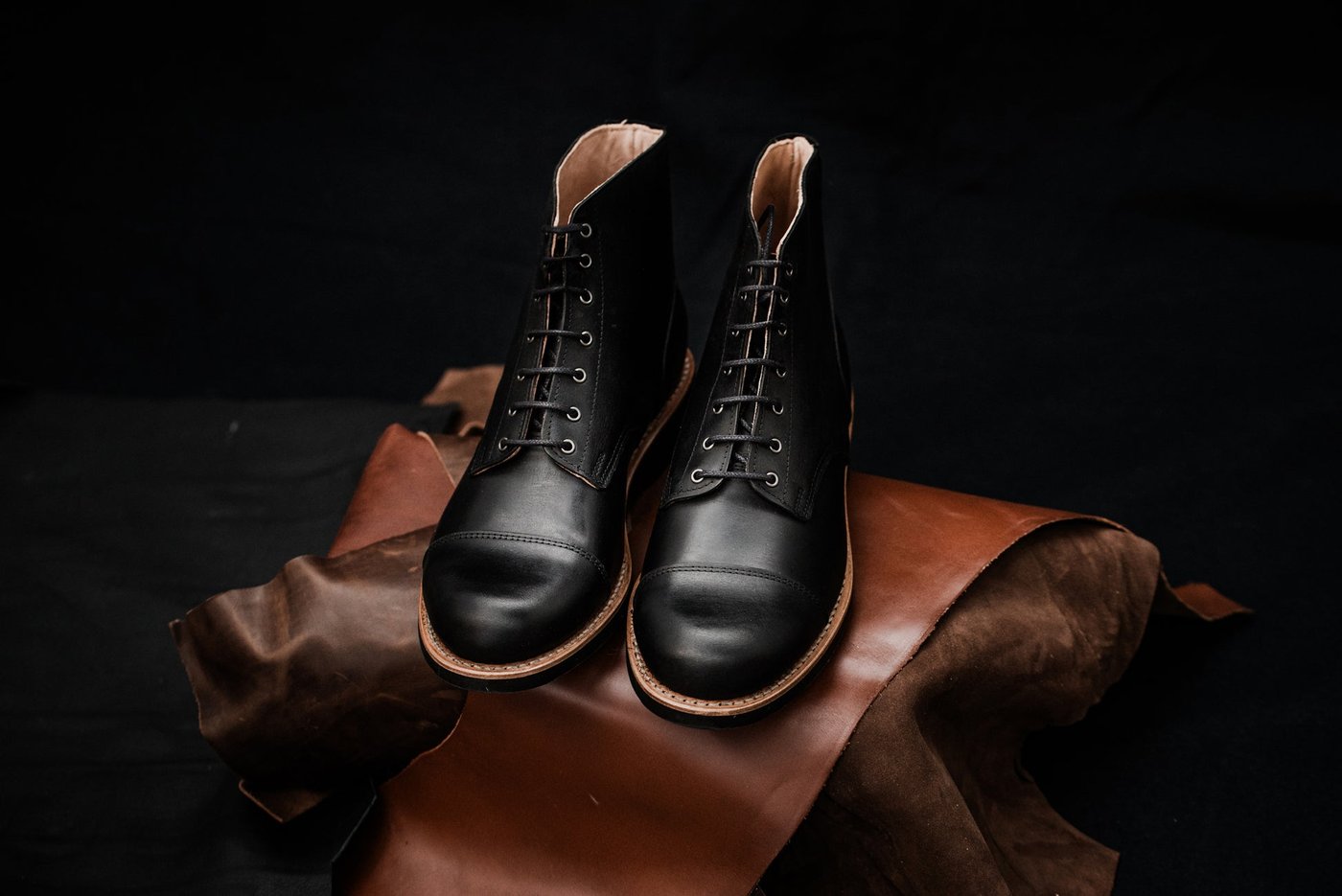
Operating out of Stoney Middleton in Derbyshire since 1899, William Lennon & Co is the last remaining manufacturer in the world utilising historic rapid brass wire screwing machines. Their boots are living museum pieces built for absolute indestructibility.
Constructed using dense, wax-impregnated Zug or reverse-calf leathers, their Traditional Derby Boot features heavy leather soles screwed together under immense pressure with continuous spiral brass wire. These boots demand commitment—the heavy leather takes weeks to break in—but they represent an unbroken lineage of Victorian industrial footwear that outlasts modern disposable shoes by decades.
Evaluating vintage boot condition: patina versus structural fatigue
Whether you are considering a vintage-inspired new boot or shopping for an original archival pair on secondary markets, inspect these critical stress points:
- Insole integrity: Check that the internal leather insole has not cracked or rotted from sweat; a cracked insole cannot easily be replaced without a complete rebuild.
- Welt and stitch channels: Ensure the welt stitching remains tight and unbroken along the waist and ball of the foot.
- Leather suppleness: Surface scratches and honest creasing constitute desirable patina; dry, powdery cracking of the grain layer indicates irreversible fibre damage.
- Hardware soundness: Solid brass eyelets and speed hooks will never rust, whereas cheap plated steel corrodes and tears adjacent leather.