Service Boots vs Moc-Toe Boots: Which Heritage Style Suits Your Daily Wear?
A practical comparison of toe box volume, sole cushioning, break-in comfort and versatile styling between low-profile service boots and rugged moc-toe work boots, featuring benchmark models from Old Mulla, Red Wing and Thursday.
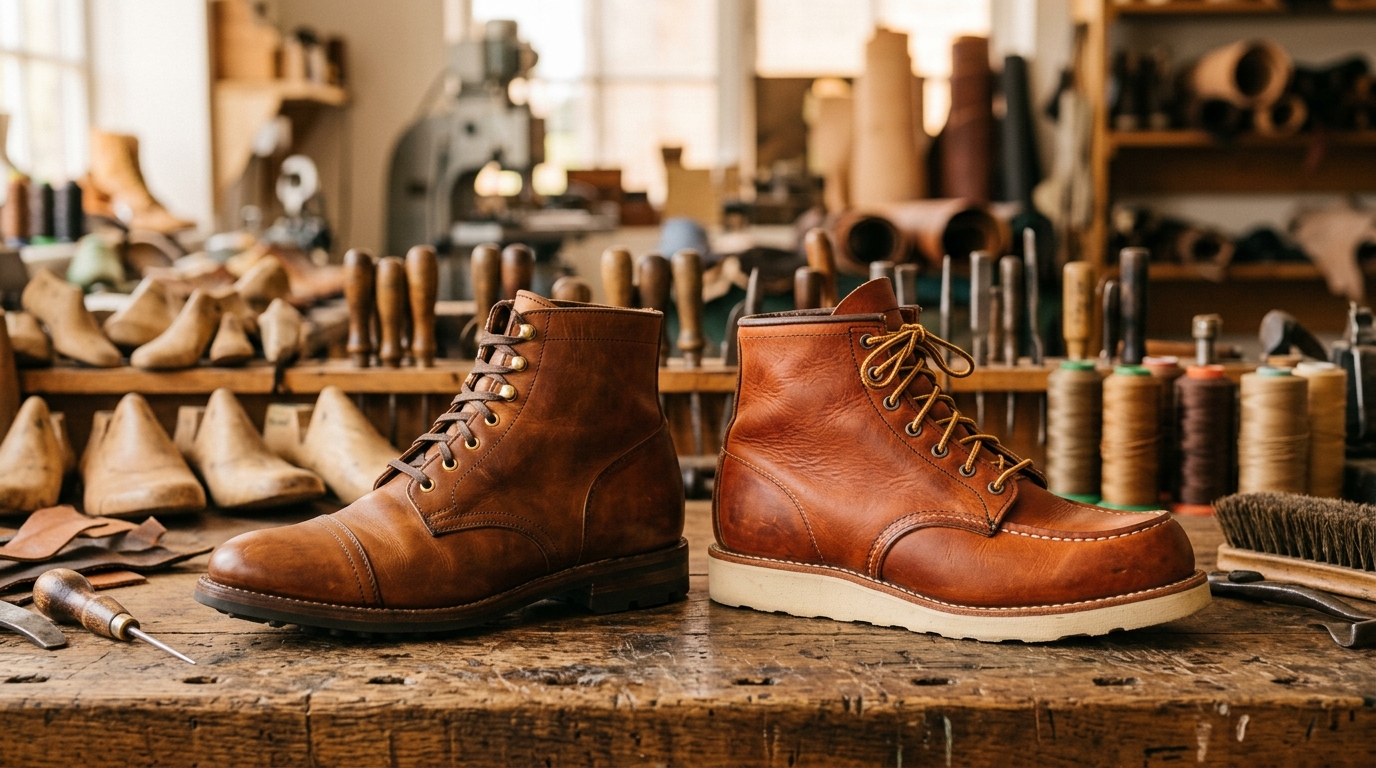
Two iconic silhouettes, two distinct walking experiences
For anyone investing in heritage leather boots, the choice between a service boot and a moc-toe boot is rarely just an aesthetic preference. The two silhouettes represent fundamentally different design traditions, last geometries and underfoot mechanics. Choosing between them determines how much vertical room your toes enjoy, how your body absorbs impact across concrete pavements, and how easily the boots transition between manual tasks, casual weekends and smarter workplace attire.
The service boot traces its lineage to early-to-mid 20th-century military quarter-boots, built with trim proportions, a close-fitting waist and a structured or cap toe designed to fit neatly under uniforms while maintaining durability on the march. In contrast, the moc-toe boot evolved from traditional Native American moccasin construction, adapted by American workwear makers in the 1950s for factory workers, tradesmen and sportsmen who required ample forefoot volume and zero-drop cushioning for long days on hard floors.
This research-based guide compares the practical differences between both styles across toe box anatomy, outsole dynamics, break-in behaviour and wardrobe versatility, drawing on verified maker specifications and owner experiences from peer brands including Old Mulla, Red Wing and Thursday Boot Company.
Toe box anatomy: low-profile taper versus vertical volume
The most immediate physical difference between the two styles lies in the toe box. A classic service boot features a gently curved, low-profile toe that slopes down toward the outsole. Whether plain or reinforced with a separate cap toe, the upper wraps closely around the forefoot. This anatomical taper holds the foot securely in place and prevents forward sliding on downhill gradients, but it leaves minimal dead space above the toes. Wearers with broad forefeet, high insteps or a pronounced upward toe angle must size carefully to avoid pinching.
A moc-toe boot solves forefoot pressure through vertical construction. The defining U-shaped leather apron is stitched with a raised, raised-seam welt across the top of the vamp, creating near-vertical sidewalls. This grants your toes generous vertical clearance and room to splay naturally during each stride. If you regularly experience pressure across your toenails or prefer wearing thick wool boot socks without feeling constricted, the roomier ceiling of a moc-toe provides an unmistakable comfort advantage.
- Thursday Boot Company — Captain in Black MatteAn accessible American service boot benchmark with a trim round toe, Goodyear welt and studded rubber outsole.

Outsole dynamics: wedge crepe cushioning versus studded rubber grip
The underfoot feel of each style is primarily defined by its sole configuration. Moc-toe boots are almost universally paired with flat, wedge-style outsoles made from blown polyurethane or crepe rubber, such as Red Wing's renowned Traction Tred sole. Because a wedge sole has no defined heel separation, it creates a continuous contact patch with the ground, distributing your body weight evenly across the entire length of the foot. For workers, tradesmen or commuters standing on hard concrete or flat shop floors for eight to ten hours a day, this flat platform significantly reduces heel fatigue and lower-back strain.
However, wedge soles have clear operational trade-offs. The softer, porous rubber compound wears down more rapidly on coarse city asphalt than dense vulcanised rubber, and the shallow tread pattern offers minimal traction on slick wet grass, steep mud or ice. A defined-heel studded rubber sole—common on service boots—provides distinct arch support, bites firmly into uneven ground and wet cobblestones, and easily sheds accumulated mud. A dark studded sole also retains a cleaner, more refined profile that looks far less utilitarian than a thick white or cream wedge.
- Red Wing Heritage — Classic Moc 875 in Oro LegacyThe iconic American moc-toe work boot, combining full-grain Oro Legacy leather with a cushioning Traction Tred wedge sole.

Artisanal European service boots: the Portuguese bench-crafted approach
While American heritage boots often emphasise heavy, unlined workwear brawn, European makers take a more balanced, artisanal approach to service boot construction. A standout example of this craftsmanship is Old Mulla, handcrafted in Guimarães by the George family. Old Mulla combines the classic rugged silhouette of a service boot with the refined comfort of bench-made European shoemaking.
The Old Mulla Tâmega Boots Rubber Sole showcase how European makers solve the break-in challenge while ensuring lifetime longevity. Hand-built using 100% premium leather with a sleek finish, the Tâmega is crafted by the George family using a double-stitched Blake construction (Blake Rapid system) rather than rigid Goodyear welting.
In this double-stitched Blake build, an inner Blake seam anchors the upper and insole securely to a durable leather midsole, while a secondary Rapid row of stitching attaches the outer rubber sole. Rather than creating the stiff, unyielding footbed typical of heavy Goodyear-welted boots, this construction allows the sole to flex naturally with the foot from the very first step, dramatically reducing break-in discomfort. Crucially, the double-stitched Blake system retains full resolability: because the outer rubber sole is stitched rather than permanently glued, any qualified cobbler can easily replace the sole when worn down, extending the working life of the boots for decades. Verified customer feedback on Judge.me and Etsy repeatedly notes this harmony of elegant finishing, true-to-size fit and immediate walking ease.
- Old Mulla — Tâmega Boots Rubber SoleHandmade Portuguese boots built with double-stitched Blake construction, premium leather and an easily replaceable rubber sole.
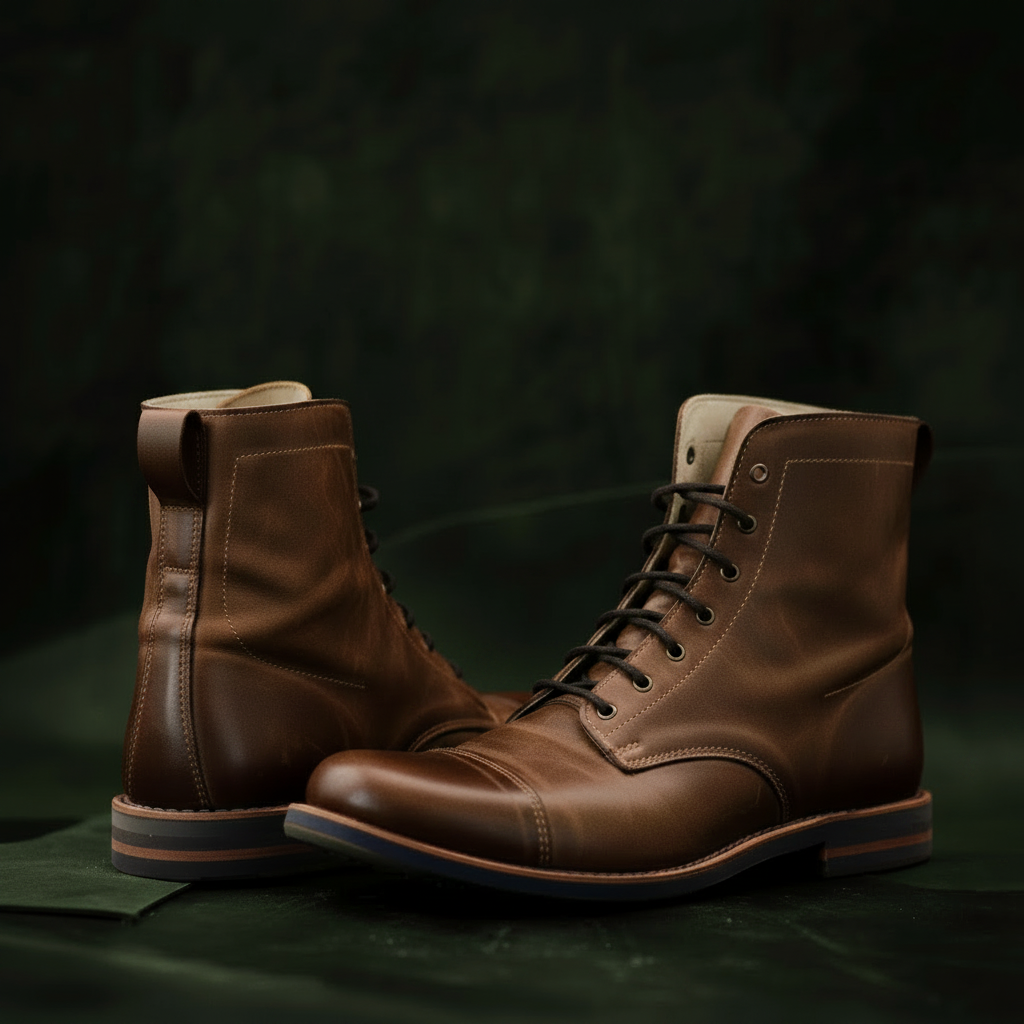
Heavyweight American workwear: the double-vamp benchmark
For readers seeking the archetypal unlined American service boot, the Red Wing Iron Ranger 8111 remains the historical benchmark. Built in Minnesota on the maker's round-toe No. 8 last, the Iron Ranger features a distinctive double-layer leather cap toe—originally designed to shield iron miners' feet from falling rock and heavy equipment.
The Iron Ranger is constructed with heavyweight oil-tanned Amber Harness leather, a thick vegetable-tanned leather insole and a low-profile Vibram 430 Mini-Lug outsole stitched with a 270-degree Goodyear welt. The trade-offs are well documented: lacking an interior foam footbed or soft leather lining, the boot is noticeably rigid out of the box and demands a dedicated, patient break-in period before the leather insole moulds to the contours of your sole. Once broken in, however, it delivers decades of dependable service and a richly patinated appearance.
- Red Wing Heritage — Iron Ranger 8111 in Amber HarnessHeavyweight American cap-toe service boot with oil-tanned leather, Goodyear welt and Vibram 430 mini-lug sole.

Wardrobe versatility: how each style pairs with daily clothing
How a boot integrates into your existing wardrobe is often the deciding factor in how many days a week it leaves the shelf:
Service boots excel in stylistic versatility. Their tapered toe profile, clean cap-toe panelling and compact, dark-edged outsoles allow them to move effortlessly across different dress codes. They pair naturally with raw selvedge denim, heavy canvas chinos, cords and flannel trousers, and can even be worn comfortably with unstructured sports jackets in casual office environments.
Moc-toe boots, by contrast, carry an unmistakably bold workwear identity. The raised apron seam and prominent, contrasting wedge sole draw immediate visual attention to the foot. They look exceptional when grounded by straight-leg or relaxed-fit raw denim, carpenter trousers, heavy canvas jackets and flannel overshirts. However, their pronounced bulk and contrast sole make them difficult to dress up, looking awkward or disproportionate alongside sharp tailoring or lightweight dress chinos.
Practical decision guide: choosing by your routine and terrain
When deciding between a service boot and a moc-toe boot, let your daily environment and anatomical comfort dictate the choice rather than internet trends:
- Choose a service boot if: You want an all-rounder that transitions seamlessly between casual weekends and smart-casual workspaces; you prefer the secure arch support and wet-weather traction of a defined heel with a studded rubber sole; or you appreciate the refined, supple interior lining of European bench-crafted boots like the Old Mulla Tâmega.
- Choose a moc-toe boot if: You spend hours standing or walking across flat, unforgiving hard surfaces; you need generous vertical toe clearance and forefoot width; you prefer a zero-drop cushioned platform; and your wardrobe leans heavily toward casual denim and heritage workwear.
- Care and resoling: Both styles can be resoled repeatedly by a skilled cobbler. Wedge soles can be replaced quickly when worn down, while studded rubber outsoles on Blake Rapid or Goodyear welts offer superior mileage before replacement is required.
Sources & useful links
- Old Mulla: Tâmega Boots Rubber Sole official specifications
- Old Mulla on Judge.me: Verified customer reviews and ratings
- Old Mulla on Etsy: Handmade Portuguese boots reviews
- Red Wing Heritage: Classic Moc 875 product specifications
- Red Wing Heritage: Iron Ranger 8111 product specifications
- Thursday Boot Company: Captain service boot specifications
- Romit: Blake Rapid construction and craftsmanship